
How We Rest
Practical tips for busy working mums with small children

Some of you recently asked me for tips on how to actually rest while being a busy working mum.
I sat with this question for a while, because I think it deserves real attention rather than a quick answer. So here it is — my honest thinking on rest, backed by some science I found genuinely reassuring.
Family Holidays Are Not Really for Resting
Let’s be honest. Once we have children and pursue our professional ambitions, we are constantly working — in some form, at some level. Particularly during the season of intensive motherhood, when our children need our care and attention most (up to their early teens, I’d guess), a family holiday is rarely restful in the traditional sense.
I see it differently now. A family holiday is quality time together. It’s a chance to learn more about our children, and about ourselves. It connects directly to something we discussed in my review of Philippa Perry’s book: our main task as parents is to build a relationship with our children. A family holiday, done with the right expectations, is one of the best opportunities we have to do exactly that.
So, next time you plan a family holiday, set realistic expectations for rest. That way, you won’t be surprised when you come home more tired than when you left.
If you have the option, also consider taking holidays with grandparents or other families with children. You can take turns caring for each other’s children so everyone gets genuine time to rest. Alternatively, book accommodation with a kids’ club, giving you a little time for yourself or with your partner. This can be a bit of a gamble, as not every child is happy to be left without their parents in an unfamiliar environment. Plus, as we discovered ourselves, you might just decide you don't want to use the kids' club even when the option is right there.
How Do Mothers Actually Rest?
The challenge is that most mums simply cannot relax at home. When you are in your own space, there is always a domestic chore calling your name, a laptop waiting to be opened, or a routine demand to take care of. One traditional answer is simple: get away entirely by yourself, or take a trip with other mums, leaving the daily demands of parenting and work completely behind.
But what happens when you can’t (or don’t want to) leave your little ones behind?
I am finishing this article shortly after returning from a trip to Nice with one of my best friends. This time, we brought our children along. Mainly because I am still breastfeeding my daughter, and my friend brought her son, who is a year older.
Let’s admit the truth upfront: travelling with a toddler is rarely a conventional holiday. It is largely about filling their needs, keeping up with their routines, and tailoring your days to their interests. So, looking back, was it still a good trip for resting?
Oh, absolutely.
It reshaped my entire definition of what “rest” means for a mum once again. It wasn’t about lying on a sun lounger for eight hours. It was about the reduction of my everyday mental and physical load. The trip was a deep reset because:
The corporate switch was off: I didn’t work, allowing my brain to completely step away from the daily professional sprint.
The mental load was halved: I didn’t need to coordinate or take care of the whole family. I only had to focus on one tiny person who is full of joy and endlessly curious about the world around her.
The domestic routine disappeared: There was no laundry to sort, no dinner to cook, and no physical household management to keep up with.
Shared mum empathy: Spending quality time with a dear friend meant we talked for hours. There is an incredible, unspoken safety in being around someone who truly understands the balancing act of motherhood.
A spark of fresh inspiration: We explored new cobblestone streets, visited parks and museums, spent time on the beaches, tried different food, and enjoyed some quiet cups of coffee in the sun.
Reclaiming hobbies: I managed to capture beautiful nature photos. More importantly, I actually read a few pages of my book — a simple holiday pleasure that has become so remarkably hard to keep hold of since having children.
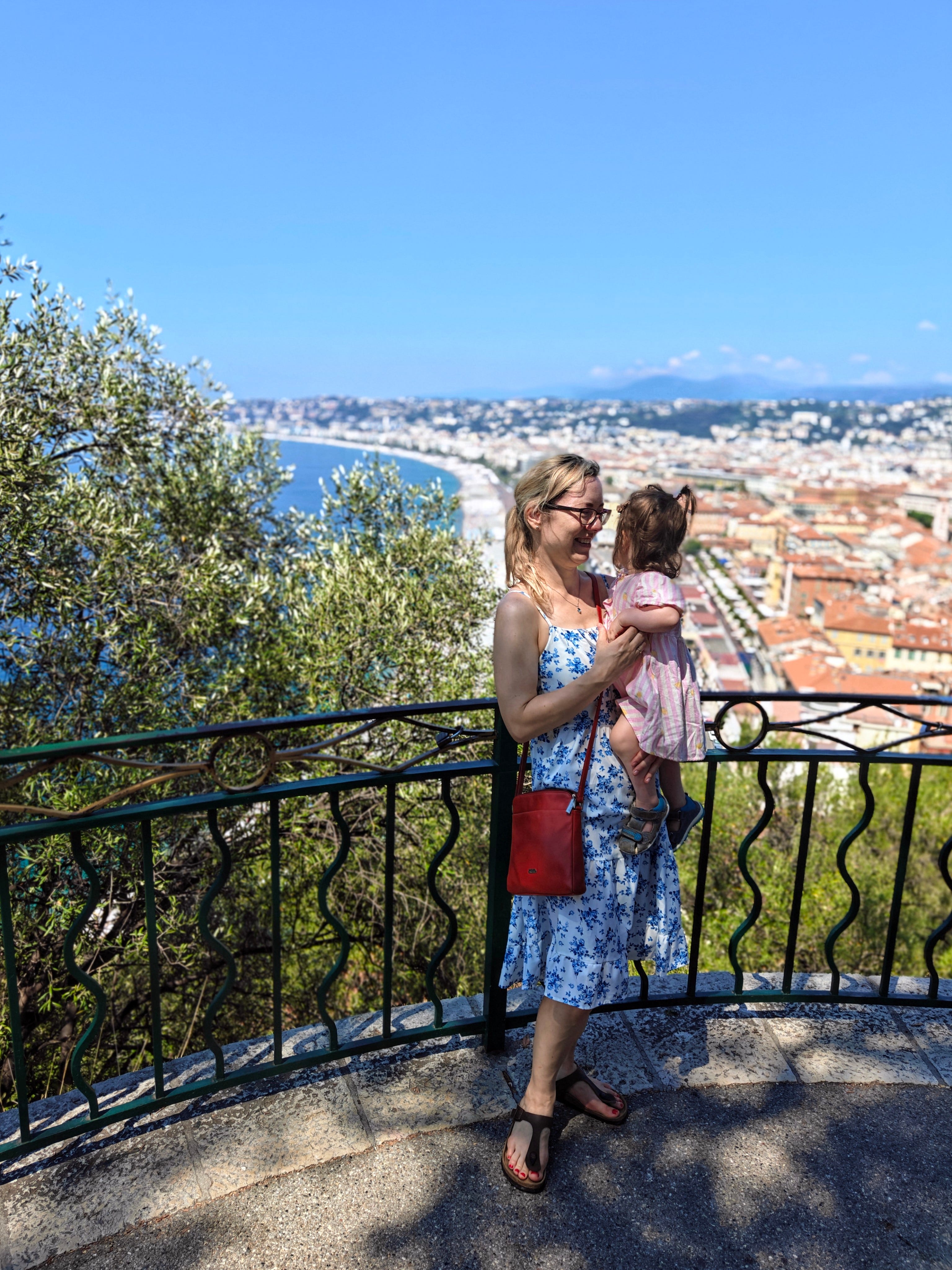
While my friend and I still have the ambition to plan a trip for just the two of us next year, this week in France taught me something vital. True rest for a working mother doesn’t always require total solitude. Sometimes, it just requires removing the heavy layers of daily logistics so you can step back into the present moment and enjoy the view. Getting away doesn't have to mean a big trip abroad, either. It can be as simple as a couple of hours away from the house or a gentle day trip — whether you go with the whole family, one child, or completely alone.
The Real Solution: Working Like a Sprinter, Not a Marathon Runner
Here is the shift that has genuinely changed things for me: rest isn’t something you wait for. It’s something you build into how you work, every single day.
This connects to something fascinating I came across in resilience and productivity research, the concept of ultradian rhythms.
Sleep researcher Nathaniel Kleitman first identified that our brains naturally cycle through roughly 90-minute periods of alertness, followed by a dip requiring genuine recovery — a pattern he called the basic rest-activity cycle. Decades later, performance researcher Anders Ericsson studied elite violinists, chess players, and athletes, discovering something remarkable: the very best performers consistently practised in focused sessions of 60 to 90 minutes, followed by real breaks, and they never trained more than about four and a half hours a day. The musicians who tried to push through longer, less structured hours actually performed worse.
In plain terms: working like a marathon runner, pushing through hours without pause, produces worse results than working like a sprinter, with genuine rest built in between blocks of effort.
Practically, this means working in focused blocks of up to 90 minutes, followed by a real break with no screens and genuine quality recovery.
What Actually Resets Us During a Break
Not all breaks are equal. This is where it gets interesting, and where positive psychology and neuroscience meet beautifully.
Psychologists Rachel and Stephen Kaplan developed what is known as Attention Restoration Theory, which explains why certain breaks genuinely restore us while others, like scrolling on our phones, do not. Their research found that the human brain has a limited capacity for what they call “directed attention” — the focused, effortful concentration required by work and parenting tasks. This capacity depletes throughout the day and needs genuine recovery, not just distraction.
Crucially, a landmark study by Berman, Jonides, and Kaplan found that a 50-minute walk in nature significantly improved directed attention, while a 50-minute walk in an urban environment showed no improvement at all. Even brief exposure helps: one clinical trial found just 20 minutes, three times a week, was enough to produce measurable benefits.
The key insight here is that a break only restores you if it genuinely steps away from directed attention. Checking your phone during a break doesn’t count. It simply redirects your depleted attention somewhere else.
Ideas for a break that actually resets you:
Go for a walk, ideally somewhere with greenery.
Move your body: try yoga, a quick gym session, or simple stretching.
Meditate, even if it is only for five minutes.
Eat your lunch away from a screen.
Socialise, even briefly, with someone who genuinely energises you.
Practise mindfulness.
Engage in a creative activity that brings you into a state of ‘flow’.
Read a chapter of a book.
Ultimately, a break that actually resets you works by inviting 'glimmers' into your day. These micro-moments of presence act as an immediate antidote to the background stress of work and parenting, giving your mind a genuine pocket of recovery. I’ve written extensively about how these small shifts build long-term resilience in The Power of the Micro-Moment.
Bringing It Back to Positive Psychology
This is where the science and positive psychology align so clearly. Martin Seligman’s PERMA model places Engagement, being fully present in an activity, as one of the five pillars of human flourishing (which I explored deeply in my article, What Actually Makes Us Happy?). A genuine break, free of screens and full of presence, isn’t an interruption to flourishing. It is flourishing, in miniature, several times a day.
This matters enormously for working mums specifically, because we so often treat rest as something earned only after everything else is done. A reward at the end of a long week, or worse, a long year. The research suggests the opposite approach works far better: small, frequent, genuine pockets of recovery, woven right into the fabric of every single day.
So, Practically, What Do You Do Now?
We need to incorporate rest into every single day. We cannot wait for the weekend, wait for the school holidays, or wait until the children are older.
Start today.
Look at your own routine and ask: where is my version of a 90-minute sprint? And what genuinely resets me afterwards, rather than what merely distracts me?
Adjust accordingly. Make rest part of the architecture of your day, not an exception to it.
With lots of love,
Kristina
Join the Community
Between the Chapters is a space dedicated to helping working mums navigate professional life, family logistics, and personal growth without losing their inner peace. If today’s reflection reminded you to take a much-needed breath, consider subscribing or sharing it with another mother who might need an instant exhale today.
Beautiful article as always, Kristina!
I’ll be honest- before my son, I LOVED to travel. We have traveled a handful of times with him…and it’s always been..an adventure lol.
At 9 months, the routines were big for him, plus bringing all the “baby stuff”.
At 2, dealing with toddler life.😅
One thing I have come to terms with is how I “envision” it in my head may not pan out..the perfect picture, the perfect memory…it just may not happen and it’s ok. We can have another version of the memory instead of what is in my head lol.
Regardless, I never regret taking the trip, because to your point, all my other “jobs” take a break for a bit! 😅
This was a great read and very helpful. Interesting about the walk in an urban environment versus in nature, and I love the bit about not waiting for the weekend. There is always room for improvement when it comes to getting sufficient rest. Thanks for sharing.